Making our Strategy Real


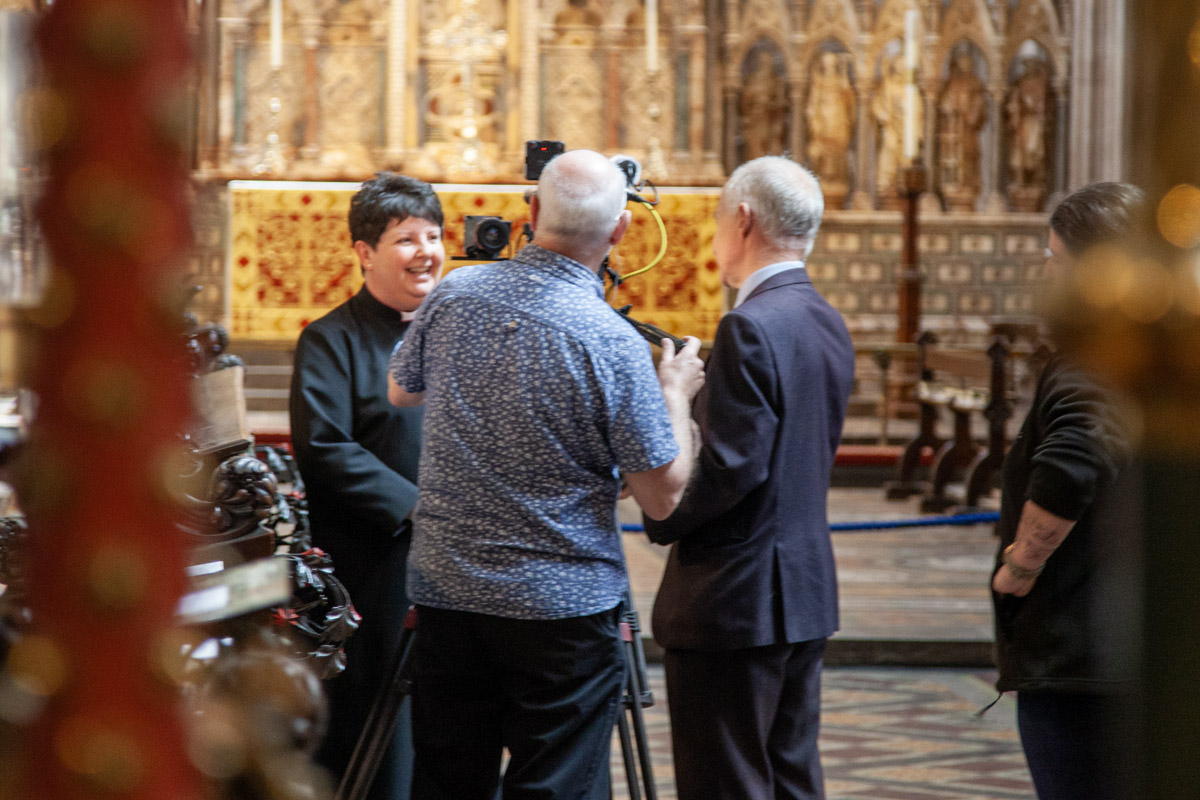
Rt Revd Jan McFarlane, Dean of Lichfield expounding the message of 'Your Cathedral' for a BBC TV's Midlands Today audience.

Alongside Feeding our Faith, Supporting our Ministry and Building Up our Parishes and Communities we need to attend to these key tasks which are essential to making Seeking the Kingdom real and realisable.

  • Developing a robust 3 – 5 year financial plan which shows how our investment in Feeding our Faith, Supporting Ministry and Resourcing Parishes and Communities will lead to a financially sustainable diocesan family
  • Creating a clear People Plan which describes how and where people, parochial clergy and DBF staff, will be deployed, formed, equipped, and sustained
  • Setting out a Communications and Stakeholder Engagement plan which ensures that everyone knows and is in engaged in delivering our strategy
  • Creating a Culture in which we journey together toward our diocesan vision:  hopeful, non-anxious, purposeful people working together for a common goal

'This is to my Father's glory that you bear much fruit,'  John 15:8 NIV

Financial Plan

Stewarding our resources for mission and sustainability.

‘Do not be anxious about anything, but in every situation, by prayer and petition, with thanksgiving, present your requests to God.’  Phil 4:6 

Many churches are anxious about money today but we believe that money follows mission  and that God is generous.  We believe that by growing discipleship and churches, the financial pressures we face today will be resolved.  However we also know we are called to steward our resources wisely if we are to see the Kingdom grow. 

Our financial commitments

1 A renewed Finance and Asset Management governance structure

We will:

  • Reshape Finance & Asset Management to improve accountability, manage risk and increase wisdom around the stewardship of all of our resources
  • Create an Asset Management Committee to support missional building decisions, reviewing investments, glebe, parish housing and educational assets as one portfolio

Our assets must serve the gospel and the future Church

2 Stronger financial planning and transparency

We will:

  • Align budgeting and financial plan with the diocesan strategy
  • Strengthen financial forecasting and scenario planning
  • Offer clearer financial information to parishes, Synod and committees

Good stewardship supports good mission.

3 Supporting parish financial sustainability

Through the Building up our Parishes and Communities workstream, we will:

  • Deliver a diocesan giving strategy
  • Support generous discipleship
  • Focus grant funding where impact will be greatest

Financial health at parish level is foundational for diocesan mission.

People Plan

Supporting, developing and empowering all who serve.

Our people — clergy, lay ministers, volunteers, staff and wider worshipping communities — are our most important resource for mission. The Seeking the Kingdom strategy identifies significant challenges: leadership vacancies, uneven lay capacity, wellbeing pressures and variable vocational pathways.

Our People Plan:

  • responds to these challenges by building a sustainable, supported and diverse community of leaders for the future
  • integrates these structural competencies with pastoral support, ensuring we can be led well into the change we seek.

Our people commitments

1 Strengthening our commitment to ministers serving where they can flourish

Working with the Supporting Our Ministry Project Board, developing better information will support stronger deployment and leadership pathways.

We will:

  • Develop a well-informed deployment strategy grounded in mission needs for today and the future
  • Anticipate and model the imaginative use of self‑supporting ministers
  • Monitor strengthened pathways into incumbency for curates
  • Review ten years of vocation data to identify opportunities to improve today
  • Inform the strengthening of lay ministries and the introduction of new training routes
  • Deliver a first‑class wellbeing programme
  • Refresh development and review systems

Deployment guided by vocation and context strengthens mission impact.

2 DBF staff development

Mirroring work to build up church leaders, we will:

  • Create a clear deployment map for DBF staff based on good information regarding roles and responsibilities, including external benchmarking
  • Build a culture of investment in people, improving productivity / efficiency, offering career development opportunities and ensure wellbeing
  • Strengthen recruitment and induction processes, performance management and exit processes
  • Improve communication across all staff, and within and between teams
  • Invest in the spiritual wellbeing of staff, offering opportunities to learn more about the Christian faith and to deepen discipleship

Healthy people support the development of healthy churches.

3 Investing in volunteers to build a culture and capability for change

The governance framework emphasises the need for:

  • Clarity of roles
  • Effective chairing
  • Strong reporting
  • Skills training for committee members

Integrating competencies and pastoral support ensures we can be led well into the change we seek

Communications & Stakeholder Engagement

Clear. Consistent. Coordinated. Culture‑shaping.

Good communication is essential for delivering our diocesan vision. Publishing a strategy is only the beginning; embedding it across our parishes, schools, chaplaincies and communities requires clear, confident and well‑coordinated communication.

Without effective communication, even the best strategy struggles to gain life. Good communication builds ownership, trust and momentum.

Why Communications Matter

As we implement Seeking the Kingdom, the volume of information flowing through our system will increase significantly. Strategic change affects every level of diocesan life, and good communication ensures:

  • Everyone feels involved and informed
  • Noise and duplication are reduced
  • Key messages land clearly at the right time
  • People understand how their work contributes to our shared mission

Our communication commitments

1 Clear, consistent diocesan messaging

We will provide:

  • Regular diocesan updates aligned to strategic milestones
  • Clear branding and templates to reinforce diocesan identity
  • Simple user guides to support local communication

This ensures our messages are recognisably part of a shared diocesan story.

2 Coordination across teams

We will:

  • Plan communication cycles to reduce overload
  • Introduce seasonal campaigns for major diocesan initiatives
  • Strengthen links between parishes, schools, chaplaincies and central teams

Well‑coordinated communication ensures strategic focus and minimises “competition” for attention.

3 Engaging all stakeholders

Communication is a key tool of governance. We need strong mechanisms for:

  • Stakeholder engagement
  • Co‑creation
  • Translation of vision into action
  • Risk communication and change control

We will ensure Synod, Bishop’s Council, committees, project boards and local leaders are all part of the communications ecosystem.

4 Culture shaping communication

Communication that reflects our values creates a culture that supports mission. Through hopeful stories, clear messaging and transparent reporting, we will:

  • Encourage innovation
  • Strengthen confidence
  • Inspire participation
  • Build alignment with the vision

Culture matters — so we will communicate in ways that build the culture we seek.

Shaping the Culture

Who we are matters as much, if not more, than what we do.

Strategy gives us direction. Culture determines how we travel together on the journey. As our vision makes clear, we are called to be a church which is confident in the gospel, knows and loves its communities, and is excited to find God already at work in the world. Culture is how these aspirations take root.

What Shaping the Culture Means

First and foremost, we are the people of God, the Body of Christ, in this place.  We need to feed our own faith so that we can support those who are looking to be fed.  We must build our trust in God so that we learn to trust one another more.  We must practice the presence of the God who says ‘Do not be anxious’ so that we might be the safe, non-anxious presence that others need in a time of change.  We must hope more so that we may offer hope to a world in need. 

From an organisational perspective, we are building a culture where:

  • People work collaboratively and trust one another
  • Decisions are made at the right level
  • Leaders are confident in their responsibilities
  • Creativity is encouraged but coordination is protected
  • Accountability is embraced as part of healthy leadership

This is the culture needed to make our transformation possible.

Our culture commitments

1 Embedding the values of Seeking the Kingdom

Our culture reflects our vision. We will embed values of:

  • Prayerful dependence
  • Generosity and hope
  • Inclusion and diversity
  • Courage to innovate
  • Honesty about challenge

A values‑shaped culture enables every ministry to flourish.

2 Team building and shared purpose

As the pace of change increases, relationships matter even more. We will:

  • Strengthen relationships across parishes, deaneries and diocesan teams through honest, transparent, reliable, two-way communication
  • Support leaders with training and coaching
  • Build mutual trust around shared goals

Culture grows through shared experiences and shared understanding.

3 Clarity about roles, authority and subsidiarity

Not everyone can be involved in every decision. To reduce bottlenecks and empower leaders:

  • Each committee and board will have clear Terms of Reference and reporting framework
  • Governance layers will be defined as oversight, advisory, working group or executive and training offered for Chairs and members
  • Decision‑making responsibilities will be mapped and communicated

This ensures decisions are made confidently and efficiently.

Page last updated: Friday 27th February 2026 7:38 AM
Powered by Church Edit